
- Home
- Import & Global Sourcing Consultancy
Import Consultancy and Global Sourcing Management
In import consultancy and global sourcing management, we find the factory that makes your product, screen out middlemen, and have the sample and mass production inspected. We calculate your product's true cost at your warehouse (landed cost), including freight, insurance, customs duties and inland transport, before you order, and we plan logistics around your campaign calendar.
Example product: a rechargeable lamp from Ningbo
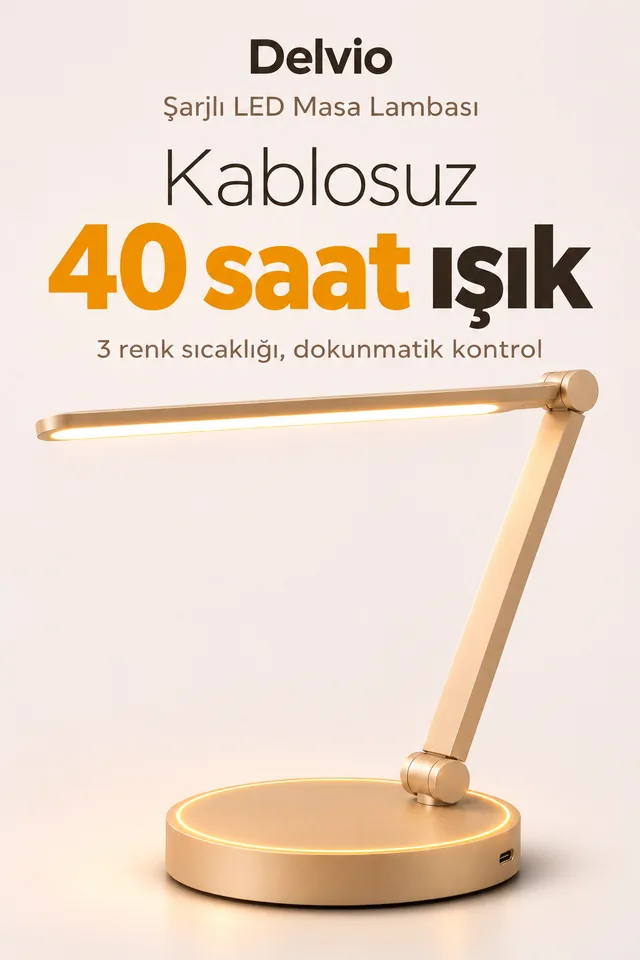
Proforma4,800 units × $6.80, FOB Ningbo
At your warehouse$9.24 / unit
See where the difference comes fromBuying directly from the manufacturer
Why Global Sourcing?
A seller who buys from a local wholesaler pays the middleman's margin on every sale. Buying from the manufacturer has three benefits.
Lower purchase cost
Cutting out the middleman lowers your unit cost. Even when a competitor cuts prices, you can keep selling without pausing your ads (PPC).
Your own brand (private label)
You sell products that are not yet common in Turkey under your own brand. You do not share the product page with a competitor, and you set the price.
Uninterrupted stock during campaigns
We plan production with the factory around the 11.11 and Black Friday calendar. If stock runs out in the middle of a campaign, the product also loses its search ranking.
How Does the Sourcing Process Work with MercanWorks OÜ?
We work in four steps: we find and verify the manufacturer, calculate your cost at the warehouse, collect the documents and plan the shipment. Before loading, an independent firm inspects the batch.
Finding and verifying the manufacturer
1. Supplier Research and Verification
We shortlist the factories that make your product on Alibaba, Global Sources and at industry trade fairs. We screen out trading companies and talk directly to the manufacturer.
What we check during verification
- Company registration and production license
- Export history: which countries it sells to, and for how long
- Certificates: CE, RoHS and product-specific test reports
- Production capacity and order schedule
- Sample process and written quality standard
You choose the supplier and sign the contract; we research, verify and advise.


The factory price is the visible tip of the iceberg
2. Import P&L and Landed Cost Analysis
The $6.80 on the proforma becomes $9.24 at your warehouse
We calculate your product's landed cost, its cost on arrival at your warehouse, line by line before you place the order. In our example, 4,800 rechargeable LED desk lamps travel from Ningbo to Turkey in a 40-foot high-cube (HC) container.
Below the waterline sit six costs the proforma does not show
- Factory price $6.80
- Sea freight $0.46
- Insurance $0.02
- Customs duty $0.29
- Additional customs duty $1.46
- Anti-dumping duty none
- Port, storage and customs broker $0.12
- Inland transport $0.09
| Item | Per unit |
|---|---|
| Factory price (FOB Ningbo) | $6.80 |
| This is the figure you see on the proforma. Under FOB, the supplier loads the goods onto the ship at Ningbo port; every cost after that is yours. | |
| Sea freight, share of a 40-foot HC container | $0.46 |
| The $2,208 container freight is divided across 4,800 lamps. The smaller the order, the larger the per-unit share. | |
| Insurance | $0.02 |
| Customs value (CIF) | $7.28 |
| Customs duties are calculated on this amount, which is the factory price plus freight and insurance. | |
| Customs duty, by HS code (example 4%) | $0.29 |
| The rate is set by your product's HS code (GTİP, the Turkish customs tariff number). A wrong HS code either makes you overpay or brings a penalty later. | |
| Additional customs duty, on Chinese-origin goods (example 20%) | $1.46 |
| This is the thickest layer below the waterline. Sellers importing from China for the first time often leave it out of their calculation. | |
| Anti-dumping duty | none for this product |
| On some products an extra duty applies, as a percentage of value or per kilo or unit. If it applies, the whole calculation changes; we check it before you order. | |
| Port, storage and customs broker | $0.12 |
| If the container waits at port, storage fees grow every day. When the documents are ready, the goods reach your warehouse within a few days. | |
| Inland transport to your warehouse | $0.09 |
| True cost at your warehouse (excluding VAT) | $9.24 |
| Estimated import VAT (20%, deductible) | $1.81 |
True cost at your warehouse
$9.24
Per unit, excluding VAT; 36% above the factory price
6.80 + 0.46 + 0.02 + 0.29 + 1.46 + 0.12 + 0.09 = $9.24
Import VAT (20%): about $1.81. It is charged on the CIF value plus customs duty, additional customs duty and the clearance costs up to that point. It is deductible, but it ties up cash for 2-3 months.
We set your selling price and ad budget together with this figure. We cover the rest of the calculation on our P&L and ad efficiency page.
Factory price (FOB Ningbo): $6.80
This is the figure you see on the proforma. Under FOB, the supplier loads the goods onto the ship at Ningbo port; every cost after that is yours.
Sea freight, share of a 40-foot HC container: $0.46
The $2,208 container freight is divided across 4,800 lamps. The smaller the order, the larger the per-unit share.
Insurance: $0.02
Customs value (CIF): $7.28
Customs duties are calculated on this amount, which is the factory price plus freight and insurance.
Customs duty, by HS code (example 4%): $0.29
The rate is set by your product's HS code (GTİP, the Turkish customs tariff number). A wrong HS code either makes you overpay or brings a penalty later.
Additional customs duty, on Chinese-origin goods (example 20%): $1.46
This is the thickest layer below the waterline. Sellers importing from China for the first time often leave it out of their calculation.
Anti-dumping duty: depends on HS code and origin; none for this product
On some products an extra duty applies, as a percentage of value or per kilo or unit. If it applies, the whole calculation changes; we check it before you order.
Port, storage and customs broker: $0.12
Inland transport to your warehouse: $0.09
If the container waits at port, storage fees grow every day. When the documents are ready, the goods reach your warehouse within a few days.
The rates are examples. Customs duty calculations are for information only; a licensed customs broker gives the exact amount.
Documents and the customs broker
3. Customs Document Coordination
Your goods arrive at customs with complete documents
We list which documents to request from the supplier for your product, and we have missing or incorrect documents corrected before loading.
Your licensed customs broker files the declaration; we collect and track the documents.
Documents we request from the supplier
- Proforma and commercial invoicePrice, quantity and delivery terms (FOB, EXW) are stated in writing
- Packing listNumber of cartons, weight and volume
- Certificate of originProves which country the product was made in; additional customs duty and anti-dumping duty depend on it
- Bill of lading (B/L)Lets you collect the cargo at the port
- Technical documentsCE declaration of conformity, RoHS test report and product-specific certificates; the product safety inspection on imports in Turkey (TAREKS) is carried out with these
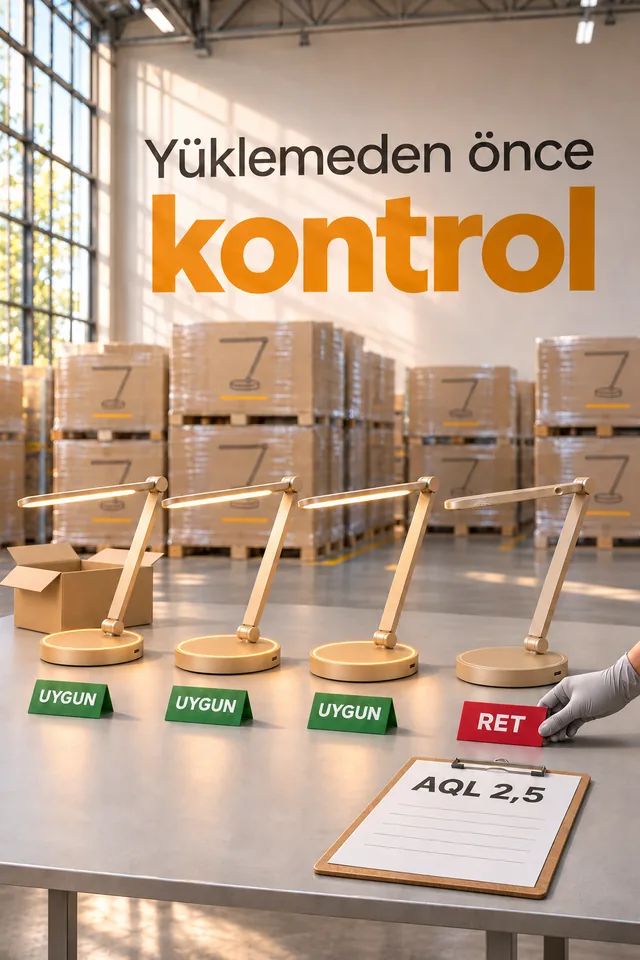
Inspected to an international sampling standard
Quality Control Before Loading
When mass production is finished and before the container is loaded, an independent inspection firm opens the batch. We schedule the inspection and read the report with you.
- Sample
- 200 lamps are picked at random from the 4,800-unit batch
- Acceptance limit
- For major defects at AQL 2.5: at most 10 defective lamps in 200
- Rejection limit
- At the 11th defective lamp the batch is not shipped; the supplier fixes it and the inspection is repeated
What we check during the inspection
- Color, surface and assembly
- Light output and color temperature
- Battery life and charging
- Carton, drop test and label
You pay the balance (usually 70%) after the inspection report arrives.
Order quantity and container fill
4. Logistics Planning and Transport Mode Selection
A large order that cuts freight cost leaves stock sitting in your warehouse for months
The right quantity comes from the balance between freight cost and the capital tied up in stock. Look at three order options for the same lamp; the factory price is $6.80 in all three.
- Freight, per unit
- $0.46
- Unit cost at your warehouse
- $9.24
- Days of stock in the warehouse (at 20 sales a day)
- 240 days
- Capital tied up
- $44,352
| Order | Freight, per unit | Unit cost at your warehouse | Days of stock in the warehouse (at 20 sales a day) | Capital tied up |
|---|---|---|---|---|
| 600 units: shared container (LCL) | $1.83 | $11.48 | 30 days | $6,888 |
| 1,800 units: 20-foot container | $0.77 | $9.83 | 90 days | $17,694 |
| 4,800 units: 40-foot HC container | $0.46 | $9.24 | 240 days | $44,352 |
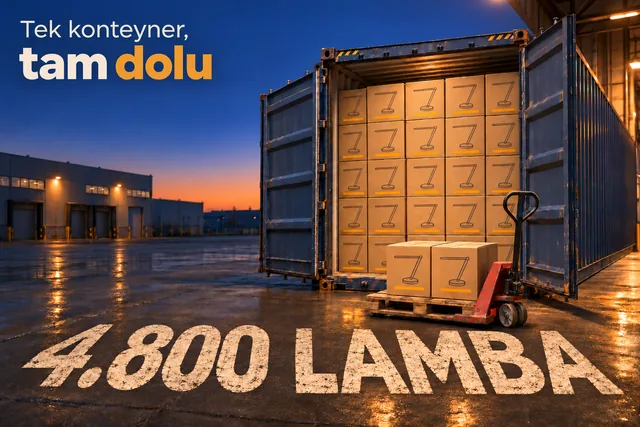
We choose the quantity together, based on your sales speed and capital
We plan for the product to reach your warehouse before the campaign together with our supply chain and inventory optimization service.
Transport mode: by the product's volume, weight and delivery date
Sea freight
30-40 days
The lowest-cost route; you choose a full container (FCL) or a shared container (LCL).
Rail
18-25 days
Comes via the Middle Corridor; faster than sea, cheaper than air.
Air freight
4-7 days
Used for urgent and lightweight products; the most expensive route per kilo.
Road (TIR truck)
4-8 days
Suitable for goods from EU member countries in Eastern Europe; delivered door to door.
Not depending on a single market
Which Markets Can You Source From?
China still leads on capacity and price for most products. We also calculate the landed cost of bringing the same product from Vietnam, Malaysia or Eastern Europe, and we show you the cheapest option.
Alongside the main supplier, we keep a verified backup source, so a problem at one factory does not stop your campaign.
- China
- The strongest hub for capacity, tooling and logistics; for most products the additional customs duty is part of the calculation.
- Vietnam
- A strong alternative to China in textiles, furniture and electronics.
- India
- Competitive in home textiles, cotton goods and metalwork.
- Malaysia
- Turkey has a free trade agreement with Malaysia; with a certificate of origin, customs duty is lower on eligible products.
- Eastern Europe
- On industrial goods from EU member countries, no customs duty is charged with an A.TR movement certificate; delivery times are short.
Who Is This Service For?
- Sellers on Trendyol (Turkey's leading marketplace), Hepsiburada or Amazon who want to lower their purchase cost
- E-commerce brands that want to launch products under their own brand (private label)
- Businesses unhappy with their supplier's price or quality
- Entrepreneurs importing from abroad for the first time who want to see the risks upfront
Once the goods reach your warehouse, these blog posts help you get ready to sell: What Is a Visual Brief in E-Commerce?, Product Description: For SEO or for Sales? and Trendyol Ads Running But No Sales: Why?
Frequently Asked Questions about Import and Global Sourcing
If your question is not here, we reply the same day.
Do you handle customs clearance for imports?
No, your customs broker files the declaration. We collect the required documents from the supplier in full and handle the correspondence with your broker; if you do not have one, we help you choose one.
Is importing from China still profitable?
For most products, yes. Profit depends on the product's landed cost; once additional customs duty and anti-dumping duty are added, Malaysia or Eastern Europe can be cheaper for some products. We calculate this for each product separately.
Why is landed cost calculation important?
If you set your selling price and ad budget from the factory price, your profit calculation is wrong from the start. In our example lamp, a $6.80 factory price becomes $9.24 at your warehouse after freight, duties and transport.
Why should Trendyol and Amazon sellers consider importing?
As ad costs rise, your purchase price protects your profit. Buying from the manufacturer lowers your unit cost, and the difference goes to price competition, the Buy Box and your ad budget.
How is supplier reliability assessed?
We check company registration, export history, certificates and production capacity, and we do not rely on a verified badge on a platform. We do not recommend placing an order without a sample and a written quality standard.
How long does the sourcing process take?
A first order by sea usually takes 2.5-4 months. Supplier research takes 1-2 weeks, samples 2-4 weeks, mass production 3-6 weeks and sea freight 30-40 days; the total varies by product and transport mode.
What is the difference between FOB and EXW quotes?
Under EXW, you collect the goods at the factory gate and bear transport inside China and export clearance. Under FOB, the supplier loads them onto the ship at the port. We convert all quotes to one delivery term before comparing.
What if the minimum order quantity (MOQ) is high?
We negotiate first: fewer colors or variants and a trial first order often lower the MOQ. If that fails, we compare the price of a verified second manufacturer that works with a lower MOQ.
What does the free pre-analysis show?
The pre-analysis diagnoses the problem: within 2 business days we send you in writing the cost items missing from your price calculation and the sourcing risks we see. Supplier research and order work start after the pre-analysis.
Free pre-analysis
Strengthen Your Supply Chain by Starting With the Hidden Costs
Before you place an order, run the numbers with us once. You see the surprise charges customs would bring while you are still at the proforma stage.
- 1 Send us your product and target price
- 2 The written pre-analysis arrives within 2 business days
- 3 If you wish, we start the supplier research together
We have received your details
Your pre-analysis reaches you on WhatsApp or by email within 2 business days.
We give you a written quote after the pre-analysis, based on the scope of the work
Instead of the form, write to us on WhatsApp or at info@mercanworks.com